
How Preventative Maintenance Protects Long-Term Property Value
For South Florida rental property owners, preventative maintenance is more than a repair strategy — it is the operational system that protects property value, NOI, and long-term investment performance.
For South Florida rental property owners, preventative maintenance is not an optional line item — it is the operational system that protects your asset. Properties with documented maintenance programs command stronger market positioning, reduce avoidable repair exposure, and help preserve rental income over time.
In South Florida, where hurricane exposure, humidity, HVAC strain, and insurance pressure all affect rental property performance, preventative maintenance is not just good practice. It is the difference between a property that holds value and one that quietly loses it.
Beam Residential works with South Florida investors to build the operational systems that make disciplined property oversight routine rather than reactive.
Preventative Maintenance and the Property Value Connection
Most rental property losses are not sudden. They accumulate over months and years — a minor roof leak allowed to expand, an HVAC filter change missed for a season, or a drainage issue noticed and set aside. Each deferred item compounds the next, and by the time a repair is unavoidable, the cost has multiplied.
This is the core problem preventative maintenance solves. It interrupts the compounding cycle before it becomes expensive.
For South Florida rental property owners specifically, the stakes are higher than they are in many other markets. The climate is demanding. Hurricane season runs from June 1 through November 30. Humidity is persistent. HVAC systems operate heavily for much of the year. Coastal conditions can accelerate corrosion and exterior wear.
In this environment, a reactive maintenance approach is not simply inefficient. It is an active threat to property value, NOI, and investor returns.
The most expensive maintenance issue is rarely the one that appears suddenly. It is usually the one that was visible early, undocumented, and allowed to compound.
Preventative maintenance is the system that keeps visible issues from becoming invisible until they are catastrophic.
What Preventative Maintenance Actually Means for Investors
The term gets used loosely. For a serious rental property investor, preventative maintenance means something specific: a scheduled, documented program of inspections, routine servicing, and proactive repairs designed to extend asset life, protect property value, and keep the property in a condition that retains good tenants and supports insurance readiness.
It is not the same as responding promptly to tenant repair requests. Responsive maintenance is reactive by definition. It addresses problems after they surface. Preventative maintenance identifies and resolves conditions before they become problems.
It is also not the same as performing a deep renovation before a new tenant arrives. That is remediation, not prevention. Preventative maintenance happens continuously — quarterly, semi-annually, and annually — as a function of ongoing asset management.
This distinction matters because the financial profile of preventative versus reactive maintenance is dramatically different.
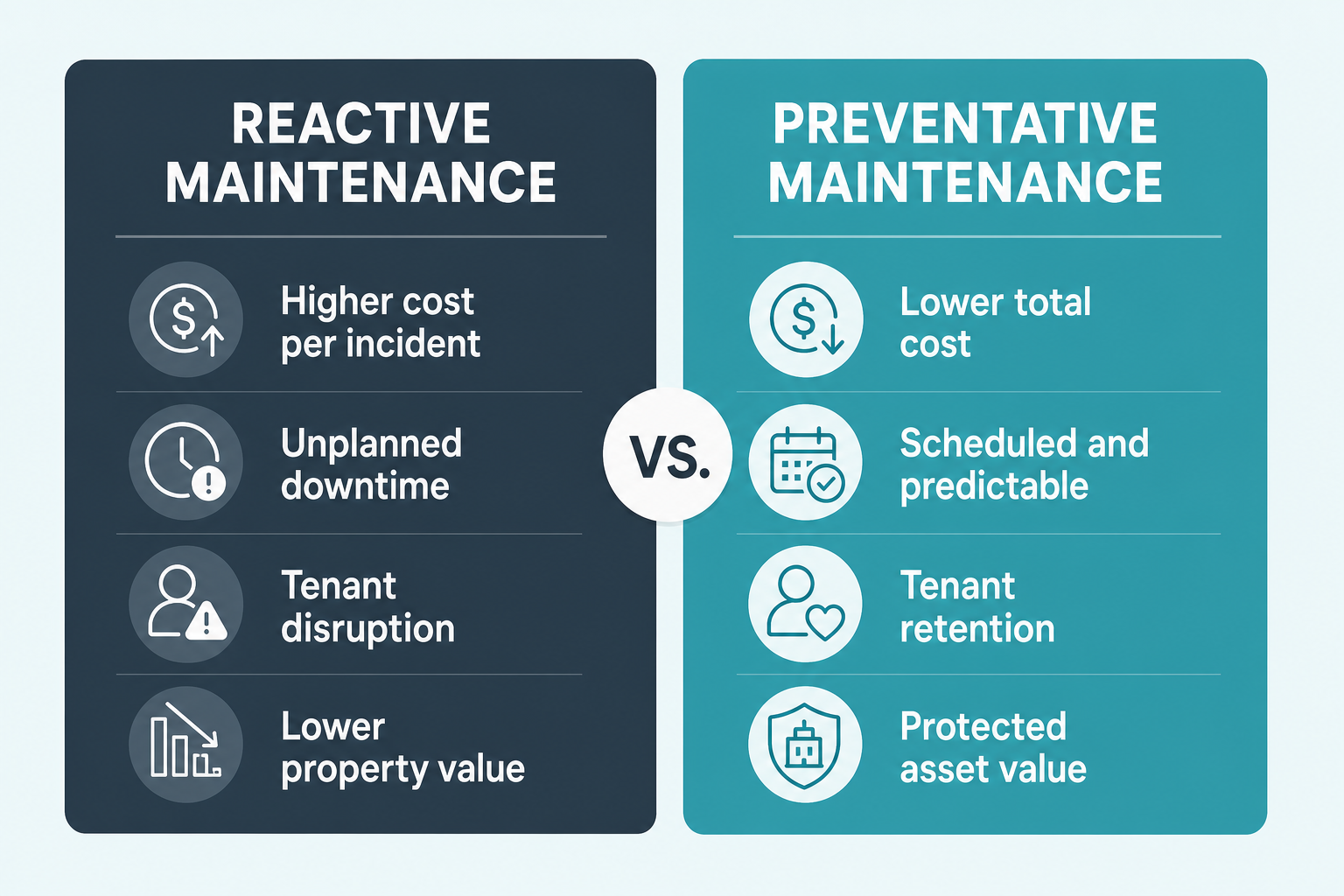
The Cost Case: Preventative vs. Reactive Maintenance
The financial argument for preventative maintenance is straightforward. Preventative maintenance creates a predictable operating rhythm. Reactive maintenance creates cost spikes, tenant disruption, and avoidable stress.
Reactive Maintenance
- Timing: After failure, often urgent.
- Cost profile: Unpredictable and usually more expensive.
- Tenant impact: Disruptive, often creating complaints or renewal risk.
- Vacancy risk: Higher, especially if repairs delay occupancy or trigger move-outs.
- Property value impact: Deferred items can reduce buyer confidence, inspection results, and long-term property condition.
- Owner stress: High because decisions are made under pressure.
- Documentation quality: Often limited to invoices after something has already gone wrong.
Preventative Maintenance
- Timing: Scheduled before failure.
- Cost profile: More predictable and easier to budget.
- Tenant impact: Lower because work is planned and coordinated.
- Vacancy risk: Lower because occupied properties remain functional and comfortable.
- Property value impact: Stronger maintenance history supports long-term value preservation.
- Owner stress: Lower because issues are documented, prioritized, and handled systematically.
- Documentation quality: Stronger because inspections, repairs, vendor records, and photos are organized over time.
To make the difference concrete, a small roof leak caught early may be a minor repair. Ignored long enough, it can become water intrusion, drywall replacement, mold remediation, tenant disruption, and insurance complications.
An annual HVAC service appointment may feel routine. A failed HVAC system during a South Florida summer can quickly become an emergency repair, a tenant satisfaction issue, and a potential lease problem.
Preventative spend is not just a maintenance expense. It is a value-protection strategy.
The South Florida Risk Environment: Why Preventative Maintenance Here Is Different
South Florida investors face a maintenance environment that is meaningfully more demanding than many other U.S. markets. Understanding these risks is the starting point for building a maintenance program that actually protects the asset.
Hurricane and Storm Exposure
The National Hurricane Center tracks tropical weather systems that affect Florida and the broader Atlantic region. For rental property owners, hurricane season requires more than last-minute preparation.
Properties with current roof inspections, functional gutters, maintained drainage, secure openings, trimmed trees, and documented storm-readiness procedures are better positioned before severe weather arrives.
Pre-storm maintenance is not hurricane-proofing. It is risk mitigation. The goal is to reduce the severity of preventable damage and help the property return to normal operation faster.
Mold and Moisture
South Florida’s humidity creates persistent moisture risk. The EPA notes that moisture control is the key to mold control. In rental properties, moisture issues can begin with roof leaks, plumbing failures, HVAC condensation problems, window seal failures, or drainage issues.
Once moisture becomes visible, the problem has often been developing for some time. Preventative maintenance focuses on finding the source early, correcting it quickly, and documenting the action taken.
HVAC Strain
In South Florida, HVAC is not a seasonal convenience. It is one of the most important systems in the property. Air conditioning affects comfort, habitability, tenant satisfaction, moisture control, and lease renewal likelihood.
Preventative HVAC maintenance should include routine filter changes, drain line clearing, coil cleaning, refrigerant checks, electrical inspections, and documentation of system condition.
A failed air conditioner during a Florida summer is not just inconvenient. It can create tenant dissatisfaction, emergency vendor demand, and unnecessary owner stress.
Insurance Readiness
Florida’s property insurance environment has made maintenance discipline more important. Roof condition, plumbing age, electrical systems, drainage, and visible deferred maintenance can affect coverage options, underwriting decisions, and renewal risk.
The Florida Office of Insurance Regulation provides oversight of the state’s insurance market, where property condition and risk management are increasingly important for owners.
An investment property without adequate insurance options is not just exposed. It can become harder to sell, refinance, or operate confidently.
South Florida Preventative Maintenance Risk Areas
The following mobile-friendly risk breakdown identifies the maintenance systems that matter most for South Florida rental property owners.
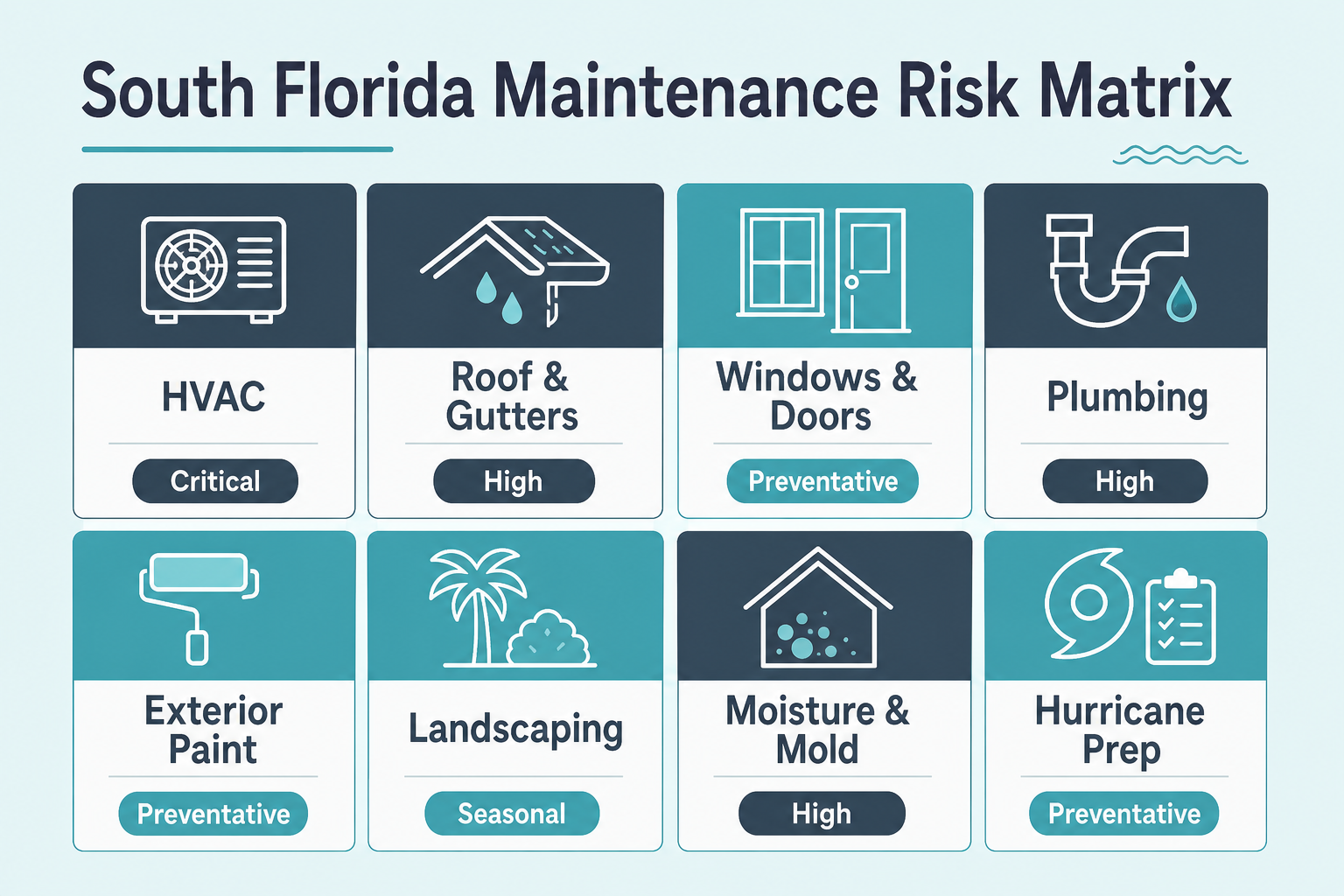
HVAC Systems
- Risk if ignored: System failure, tenant complaints, moisture control issues, and emergency repair costs.
- Preventative action: Regular filter changes, drain line clearing, coil cleaning, refrigerant checks, and annual system inspections.
- Investor impact: Better tenant retention, fewer emergency calls, and stronger protection of NOI.
Roof and Gutters
- Risk if ignored: Water intrusion, mold, structural damage, and storm vulnerability.
- Preventative action: Annual roof inspections, gutter cleaning, drainage checks, and prompt repair of minor damage.
- Investor impact: Stronger insurability, better storm readiness, and long-term property value protection.
Windows and Doors
- Risk if ignored: Water intrusion, air leakage, reduced energy efficiency, and storm exposure.
- Preventative action: Inspect seals, caulking, locks, frames, and impact protection where applicable.
- Investor impact: Improved tenant comfort, lower risk of moisture problems, and better property resilience.
Plumbing
- Risk if ignored: Leaks, water damage, mold growth, and tenant disruption.
- Preventative action: Inspect fixtures, supply lines, shutoff valves, water heaters, and signs of corrosion or slow leaks.
- Investor impact: Reduced emergency repair exposure and stronger documentation for insurance or tenant disputes.
Exterior Paint and Sealants
- Risk if ignored: Moisture intrusion, salt-air deterioration, wood rot, and reduced curb appeal.
- Preventative action: Inspect exterior surfaces, refresh caulking, repair cracks, and repaint on a planned schedule.
- Investor impact: Better tenant attraction, stronger curb appeal, and improved protection of exterior materials.
Landscaping and Tree Trimming
- Risk if ignored: Storm debris, roof damage, blocked drainage, and liability issues.
- Preventative action: Trim trees before hurricane season, clear debris, maintain drainage paths, and manage overgrowth.
- Investor impact: Reduced storm exposure and a cleaner, more professionally maintained property.
Moisture and Mold Prevention
- Risk if ignored: Mold growth, tenant health complaints, lease disruption, and remediation costs.
- Preventative action: Monitor humidity-prone areas, inspect around windows and plumbing, clear HVAC condensation lines, and address leaks immediately.
- Investor impact: Lower liability risk, better tenant satisfaction, and stronger property condition control.
Hurricane Preparation
- Risk if ignored: Preventable storm damage, extended vacancy, and delayed recovery.
- Preventative action: Complete pre-season inspections, verify shutters or impact windows, trim trees, clear gutters, and document property condition before storms.
- Investor impact: Faster recovery, better documentation, and stronger asset protection during storm season.
The Beam Preventative Maintenance Value Protection Framework
Most property management approaches treat maintenance as a response function — something that happens when a tenant submits a request or a component breaks. That is the structure of a reactive operation.
Protecting long-term property value requires a different structure. Beam Residential uses a five-phase operational framework designed to treat maintenance as an asset management discipline rather than a service function.
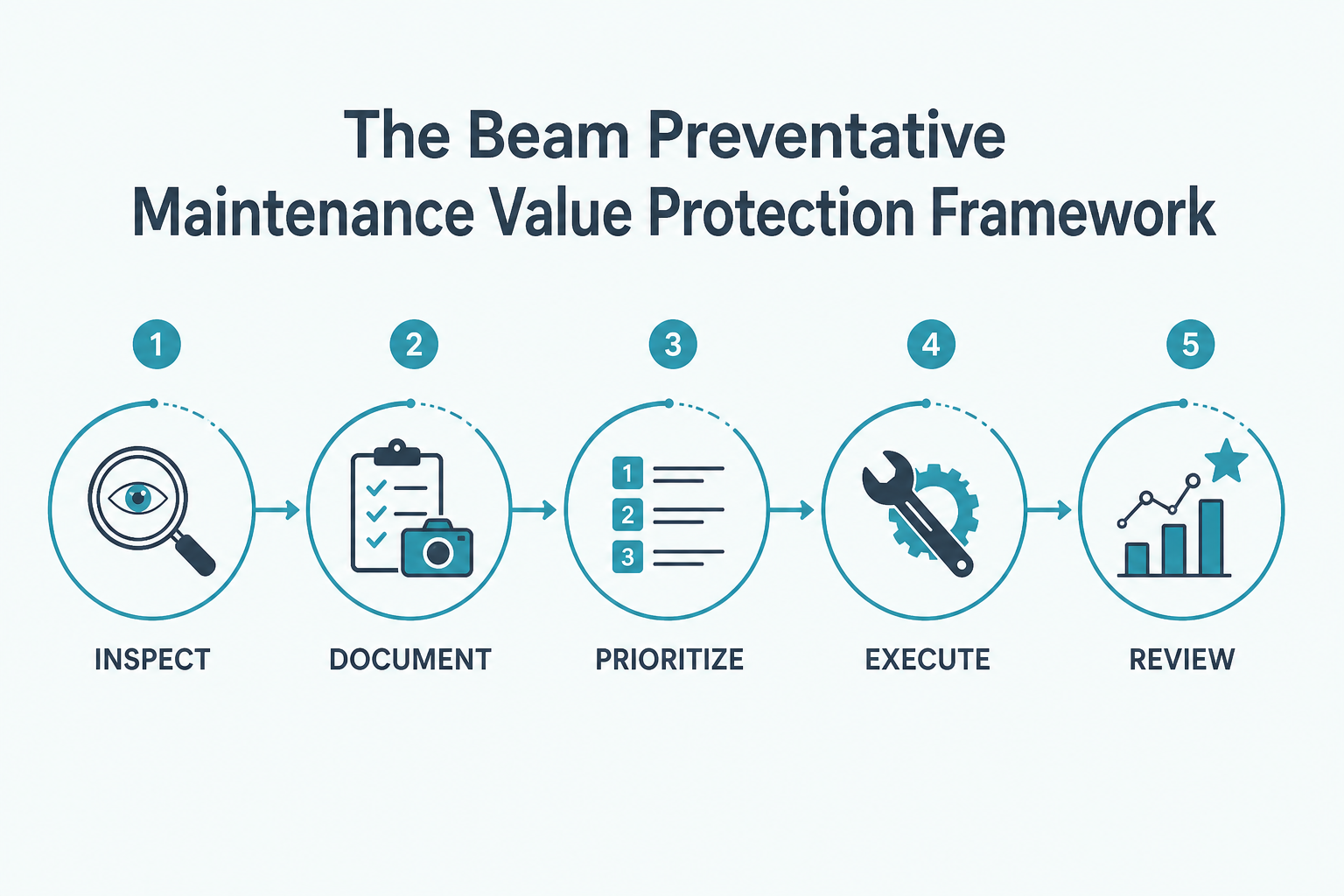
Phase 1: Inspect
Scheduled property condition reviews are the foundation. These are not ad-hoc walk-throughs driven by tenant complaints. They are systematic inspections on a defined calendar.
This may include move-in documentation, move-out documentation, mid-tenancy reviews, annual maintenance inspections, and pre-hurricane season assessments.
Phase 2: Document
Every inspection, repair, vendor visit, and maintenance action should create a record. Photos, maintenance logs, vendor invoices, repair histories, and warranty details should be organized by property and system.
Documentation supports insurance claims, protects owners in tenant disputes, creates a clean record for future sale, and helps property managers make better decisions.
A property without maintenance documentation is harder to sell, harder to insure, and harder to manage — regardless of its physical condition.
Phase 3: Prioritize
Not all maintenance items carry the same urgency or investor impact. A disciplined maintenance program separates urgent, seasonal, preventative, and capital items.
This allows owners to make better decisions, allocate budget more intelligently, and address the most consequential issues first.
Phase 4: Execute
Execution includes vendor coordination, repair completion, owner communication, quality verification, and invoice review.
Good inspection and documentation only create value if the work that follows is coordinated efficiently and completed correctly.
Phase 5: Review
After each maintenance cycle, the results should be reviewed. What did the issue cost? Did it affect the tenant experience? Was it a one-time repair or part of a larger pattern? Does it suggest a future capital improvement?
This review loop converts maintenance history into operational intelligence.
The NOI Connection: How Maintenance Protects Income
Rental property investors measure performance through income, expense control, and long-term asset value. Preventative maintenance supports all three.
Occupancy
Well-maintained properties are easier to lease and easier to keep occupied. Tenants are more likely to renew when systems work, communication is clear, and the property feels professionally managed.
Rent Quality
A property with current HVAC, clean exterior condition, working systems, and no visible deferred maintenance is better positioned to support market rent. Preventative maintenance protects the property’s ability to compete.
Turnover Reduction
Each tenant turnover creates cleaning, repairs, leasing work, vacancy time, and administrative burden. Maintenance-driven tenant satisfaction is one of the most practical ways to reduce turnover frequency.
Preventative maintenance does not just protect the physical property. It protects the income stream attached to the property.
What This Means for Absentee Owners, Trustees, and Portfolio Investors
The investors who most depend on a systematic preventative maintenance program are often the ones least equipped to manage it informally.
Absentee Owners
Absentee owners cannot casually inspect their properties without travel and coordination. Without a structured inspection and documentation program, they are often relying on problems being reported after they become visible.
Trustees and Executors
Trustees and executors managing estate properties have a responsibility to preserve asset value. A documented maintenance program helps demonstrate that the property is being cared for in a disciplined, responsible way.
Portfolio Investors
Portfolio investors need consistency across multiple properties. Without a system, maintenance becomes reactive across the entire portfolio. With a system, owners can identify patterns, plan capital needs, and protect NOI more effectively.
In each case, the gap between what the property requires and what an owner can consistently manage alone is where a systems-driven property management partner becomes valuable.
Try Beam Residential
Beam Residential works with South Florida rental property owners, absentee investors, trustees, and portfolio managers who want organized operational oversight — not just rent collection.
If you own rental property in South Florida and want a more organized way to protect its long-term value, Beam Management Group can help you build the operational systems behind stress-free ownership: scheduled inspections, documented maintenance programs, vetted vendor relationships, and a preventative approach that protects your asset year over year.
👉 Contact us today to discuss building a preventative maintenance framework that secures your property value and maximizes your NOI.
Frequently Asked Questions
How does preventative maintenance protect property value for South Florida landlords?
Preventative maintenance protects property value by catching small issues before they compound into costly failures. In South Florida, deferred maintenance can affect property condition, tenant retention, insurance readiness, and resale confidence.
Residential asset protection starts with preventative maintenance as its operational foundation.
How much should I budget annually for preventative maintenance on a South Florida rental property?
A realistic preventative maintenance budget depends on the property’s age, condition, systems, and exposure. South Florida rental owners should plan for recurring HVAC service, roof and drainage inspections, plumbing checks, exterior sealing, and pre-hurricane season preparation.
The exact amount varies by property, but the important principle is consistency. Preventative maintenance should be a planned operating expense, not an emergency response fund only.
Why is HVAC maintenance especially important for Florida rental properties?
South Florida HVAC systems run heavily for much of the year. That makes filter changes, coil cleaning, drain line clearing, and annual inspections especially important.
A failed HVAC system during summer can create tenant dissatisfaction, emergency repair costs, and avoidable lease stress. Preventative HVAC maintenance protects comfort, moisture control, and tenant retention.
What are the biggest preventative maintenance risks specific to South Florida rental properties?
The biggest risks include HVAC strain, roof leaks, clogged drainage, water intrusion, mold, exterior deterioration, tree damage during storms, and hurricane-season preparation gaps.
Because South Florida properties face heat, humidity, tropical weather, and insurance pressure, maintenance needs to be more structured than in many other markets.
Does preventative maintenance improve tenant retention?
Yes. Tenants are more likely to renew when the property is clean, functional, comfortable, and professionally maintained.
Preventative maintenance reduces disruptive repair events, improves communication, and signals that the property is being managed seriously. That helps reduce turnover and protect rental income.
Ready to transform your maintenance from reactive to proactive?
👉 Contact us today to discuss building a preventative maintenance framework that secures your property value and maximizes your NOI.